Sun Shade Sails: Stylish and Functional Outdoor Protection
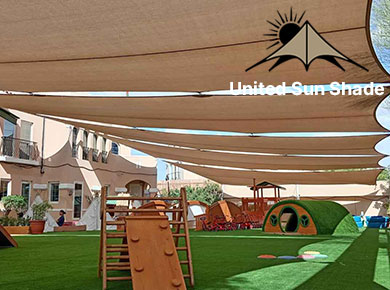
Dubai has extreme sunlight in outdoor areas throughout the year. Long term exposure to open spaces impacts comfort, furniture and usability. An appropriately made sun shade sail can be used without covering the face and only allows air to pass through.
Tensile fabric sails also give light-filtering shade, unlike the bulky roofing systems that cover the area. They design practical exterior spaces for villas, schools, cafes, and businesses. Sails are ideal for property owners who are seeking an outdoor sunshade dubai solution due to the architectural flexibility they offer.
Shade Sail Design Demystified.
A canopy is a tensioned piece of fabric commonly attached to anchor points in the form of a sun shade sail. The cloth is taut to ensure that it does not hang loose and to avoid the accumulation of water. The triangular, square, or rectangular shapes enable the designers to tailor the coverage according to the layout of the site.
Fabrics of high quality are able to resist UV rays and heat under the canopy. The sail is structurally stable because when it is tensioned correctly, it allows air to pass through it. A host of projects in the outdoor sunshade Dubai market segment embrace the use of several kinds of layers to provide more sculpturally.
Selection of Material and Fabric
The quality of fabrics defines the performance in terms of durability and shade. The majority of sail systems are made out of HDPE knitted cloth or PVC-coated cloth. HDPE helps the movement of air and prevents a large share of UV radiation that is the cause of harm. PVC provides waterproof and also tension stability.
The project’s needs will determine the option. The gardens surrounding the residences can focus on airflow and diffused light. Commercial premises might need waterproofing and augmented structural fortification. Before prescribing fabric specifications, professional suppliers evaluate the environmental exposure.
Anchoring and Structural Support
Proper anchoring is the basis of the effectiveness of a sail. Installations are usually done on steel posts, concrete foundations, or structural walls at hand. All anchor points should be able to support the wind pressure and tension of the fabric.
Installation Planning Fundamentals
A successful installation is based on an accurate site assessment. Professionals assess the direction of wind, the movement of the sun and space constraints. They consider surface materials in order to identify favorable anchor systems.
The process of the installation will include the setting of posts, the curing of foundations, mounting hardware, installation, and installation, as well as the tensioning of the fabric. Sufficient slope angles eliminate water pools. Monotony prevents creases and improves life expectancy.
Aesthetic Pleasure of Architecture
Shade sails are an added value to the aesthetics of outdoor designs. Their geometric forms are of a flowing nature and are a complement to both contemporary and traditional architecture. The shades of neutral fabrics are mixed with villa facades, and the bright colours form a contrast in business areas.
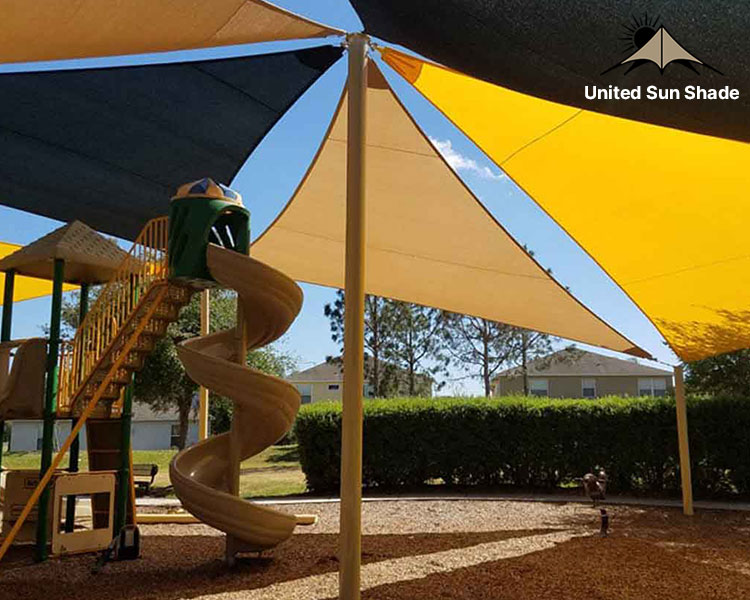
There can be a series of sails that can brush against each other to create dynamic effects of light and shadow. The positioning of sails is often different to provide depth to designers. This is a stratified technique that improves spatial character without compromising functional coverage.
Heat-resistant and UV Protection
The climate in Dubai requires solid UV protection. Shade fabrics of high quality minimise the amount of solar heat collected under the canopy. They block unwanted ultraviolet radiations and daylight is freely passed through them.
Less direct sunlight will save outdoor furniture in terms of fading and damage to materials. It is also more comfortable to sit, dine, or use it for recreational purposes. During high sun hours, maximum shading is maximised by proper orientation.
Uses Among Properties
Shade sails are used in varied environments. They are used in residential gardens over patios, swimming pools and playgrounds.
- They are mounted on the playgrounds of schools where they are placed to ensure the safety of the students.
- Restaurants go with shaded seating to increase the outdoor facility.
- Business premises include sails in the yard and doorways.
- Car parks enjoy the protection of UV to maintain the interiors of vehicles.
Tensile systems are flexible, allowing customised coverage without extensive construction.
Longevity and Maintenance Factors
Regular servicing prolongs the life of the fabric. Dust and debris are removed after some time. Check-ups maintain the safety of the anchor points and tension.
During the high-wind seasons, the professionals might suggest hardware stability checking. When systems are installed in proper ways, they can deliver long-term performance provided that they are maintained in proper ways. The choice of materials that are long-lasting will minimise the rate of replacement and operational hiccups.
Weather Resistance for Environmental Protection
The wind exposure is an important aspect of structural planning. There should be compliance between fabric tension, anchor strength and anticipated wind loads. Right angles of installation maximise water drainage during precipitation.
Sails with PVC-coating can be waterproof, whereas HDPE fabrics can be controlled. The choice of the material also affects the performance of the system, based on weather conditions. Engineering tests attract appropriate settings.
Design Flexibility and Customisation
Each open area has its own obstacles. Custom fabrication permits sizing and alignment in shape. Designers take into account the construction orientation, the path of the sun and the movement pattern of the user.
Clients will have an option of different colours and types of fabric. Tensile architecture is flexible enough to accommodate creative designs with no permanent roofing. Customisation improves functionality as well as aesthetic integration.
Environmental Impact and Sustainability.
Passive cooling is achieved through shade sails. They cover the walls and glass surfaces with direct sunlight to reduce indoor heat gain. This can help enhance the activity of the adjoining interior spaces.
Breathable fabrics allow the passage of air and restrict the intensity of sunlight. Green materials are also consistent with green building.
Conclusion
The sun shade sail systems offer an architectural beauty with usability outdoors. They make them comfortable, reduce UV exposure, and convert open spaces into usable areas.
Long-term durability is established by careful selection of materials, structural engineering and professional installation. Planned strategically, shade sails will provide aesthetically polished areas that are appropriate in the climatic conditions of Dubai.
United Sunshade produces professionally designed shade sail systems that are engineered to be durable and of classy designs. The company with a long experience in the UAE shading industry offers individualised tensile constructions, which can be used in residential and commercial buildings, and are guaranteed to perform well under the conditions of the region’s climate.
Author Bio
The author focuses on the tensile fabric solutions and architectural shading systems in the UAE. Having a vast understanding of the material performance and structural planning, he develops informative blogs that help property owners choose the quality outdoor shading structures that fit the climatic conditions in the region.